PV Thursday 9th July 6–9pm
‘Rea-Matere’ Performance by Teo Ala-Ruona & Collaborators 9th July at 7:30–8pm
Teo Ala-Ruona & Collaborators
John Humphreys
Mike Kelley
Zein Majali
Paul McCarthy
Chino Moya
Anna Mikkola
Benjamin Orlow
Jaakko Pallasvuo
Anni Puolakka
Joel Slotte
Ausgang Studio
Viktor Timofeev
Assembled by Joey Holder with special thanks to Julia Greenway
This project is generously supported by The Finnish Institute UK & Ireland, Zodiak Center for New Dance, Taike, FRAME Finland and Kordelin.
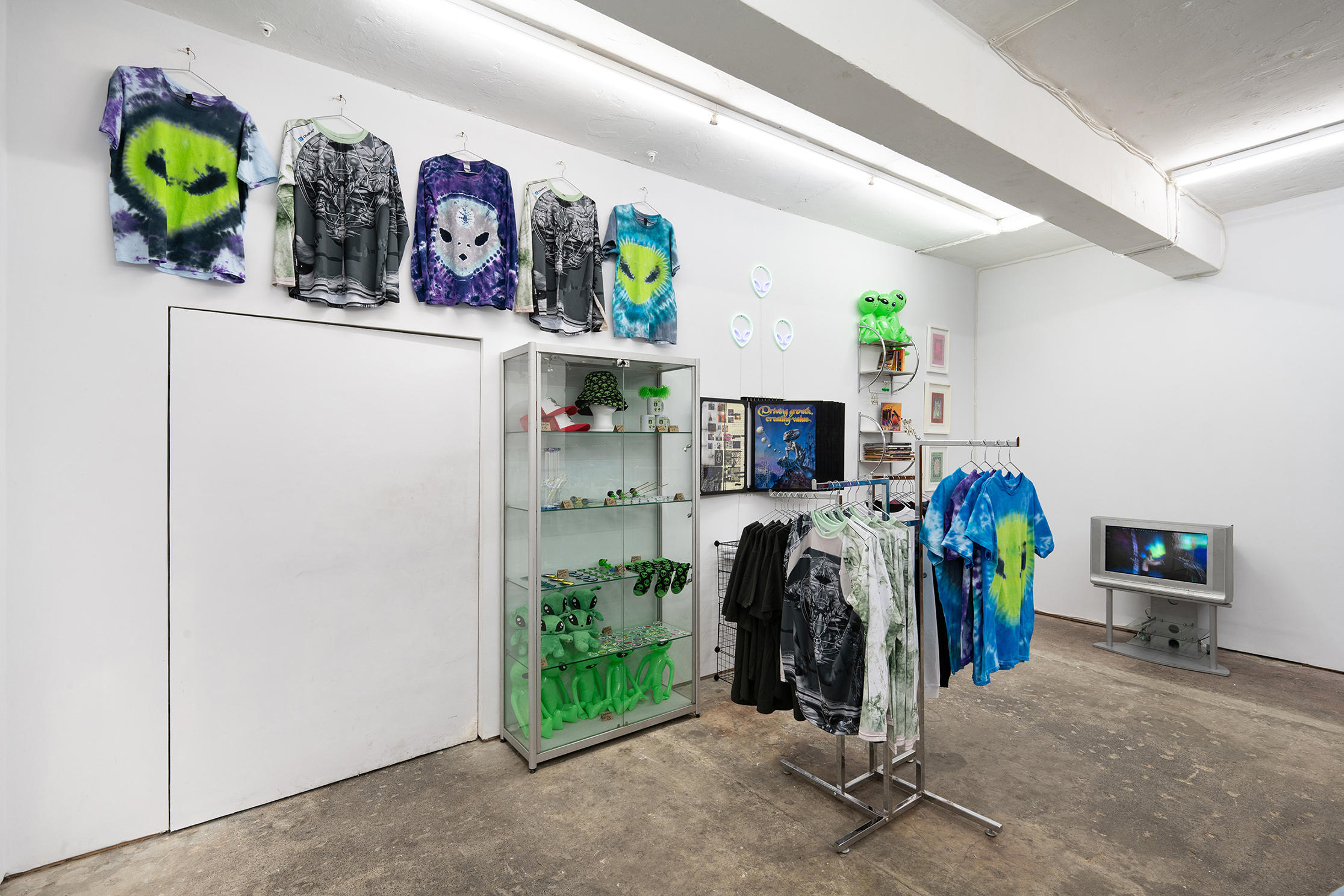
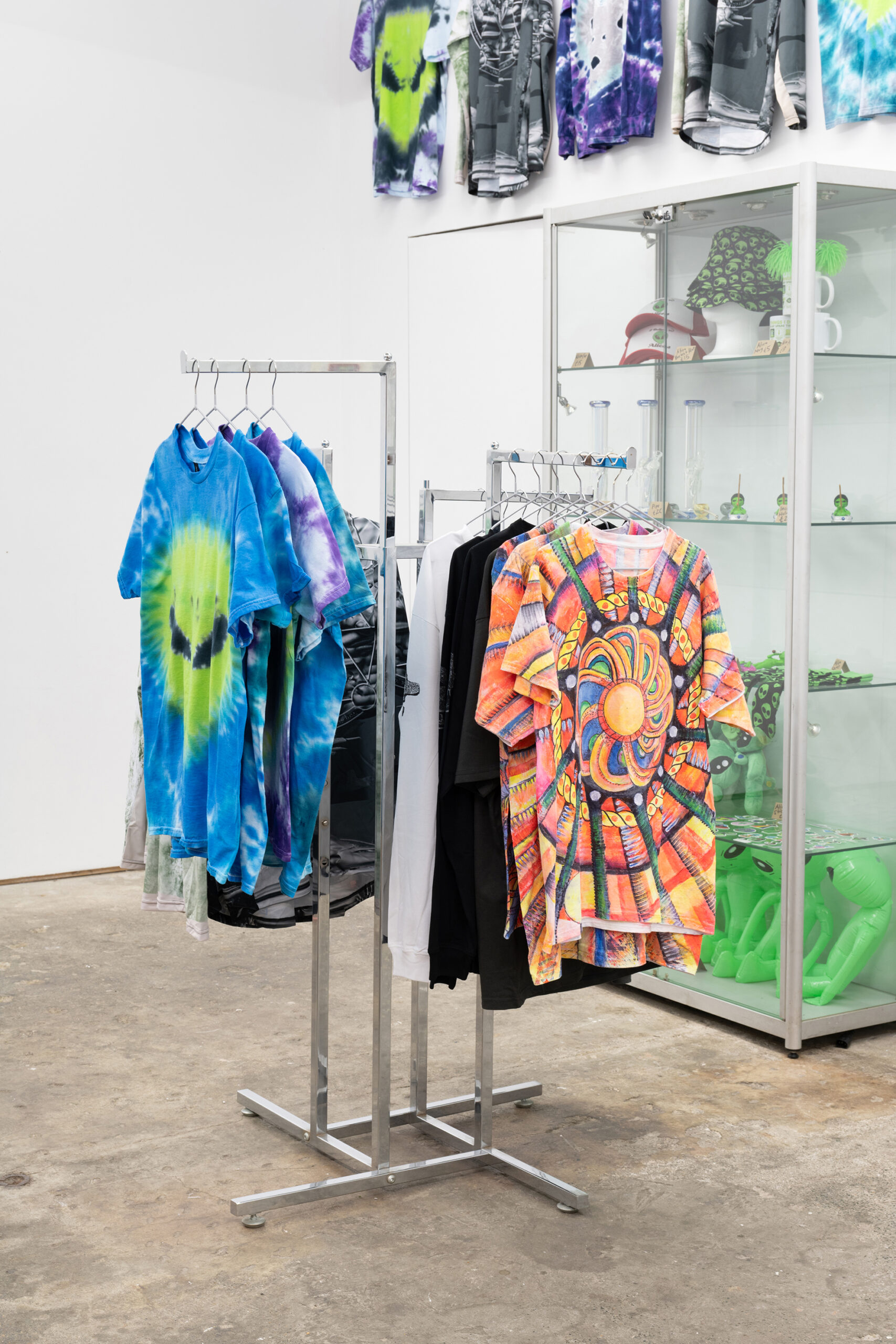
AUTOPSY is an exhibition which explores how beliefs, evidence, and reality are constructed in the digital age through the lens of UFOs and anomalous phenomena.
AUTOPSY emerges at a moment when the relationship between evidence and belief has fundamentally collapsed. We live in a world where verifiable facts no longer determine what people accept as true, where competing realities circulate with equal authority, and where the mechanisms that once separated truth from fiction have dissolved into contested narratives. Conspiracy theories operate with the same epistemological weight as scientific consensus. Documentation proves everything and nothing simultaneously. Our collective stories have fragmented into incompatible narratives that cannot be reconciled; they only multiply endlessly.
AUTOPSY directly examines this moment by bringing together artists to consider not only the content of contemporary anomaly discourse, but also the mechanisms by which beliefs are constructed. Rather than attempting to verify or debunk specific claims, the exhibition presents the state of narrative chaos itself, creating a space where documentation, classification, and dissemination are visible as belief-generating mechanisms.
Through multimedia artworks that reflect, expand, and question the methodologies of anomaly research, AUTOPSY demonstrates that investigations no longer reveal truth but produce competing realities; that evidence accumulates without resolution; and that attempts to classify phenomena generate new unclassifiable categories.
The Roswell Alien
The exhibition features the alien prop from the famous Alien Autopsy film. In 1995, a grainy black-and-white video surfaced claiming to show American military doctors dissecting the body of an alien, supposedly recovered from the 1947 Roswell UFO crash in New Mexico, one of the most famous UFO incidents in American history. The footage aired on television to millions of
viewers worldwide and triggered years of public debate over whether it was genuine. Rarely shown in a public context, the alien is at the centre of that controversy.
Producer Ray Santilli states that the original footage had come from a retired American military cameraman. After the film was acquired, it was accidentally exposed to light and deteriorated beyond use, leaving only a handful of reference frames to work from. To this day, the film’s makers maintain that what survives is a reconstruction of real footage they had seen. A reconstruction, rather than fabrication a claim they stand by even now, decades on, with the story currently being revisited in the documentary series The Alien Autopsy Scandal, airing on Sky TV and NOW.
Sculpted by artist John Humphreys from those same handful of poor-quality reference frames, the alien occupies an odd position: a prop built to imitate evidence, which then became evidence in its own right for those determined to believe. Its presence here, in a context concerned with the construction of anomaly and the machinery of disclosure, asks the viewer to sit with the possibility.
Performance: Rea-Matere by Teo Ala-Ruona & Collaborators
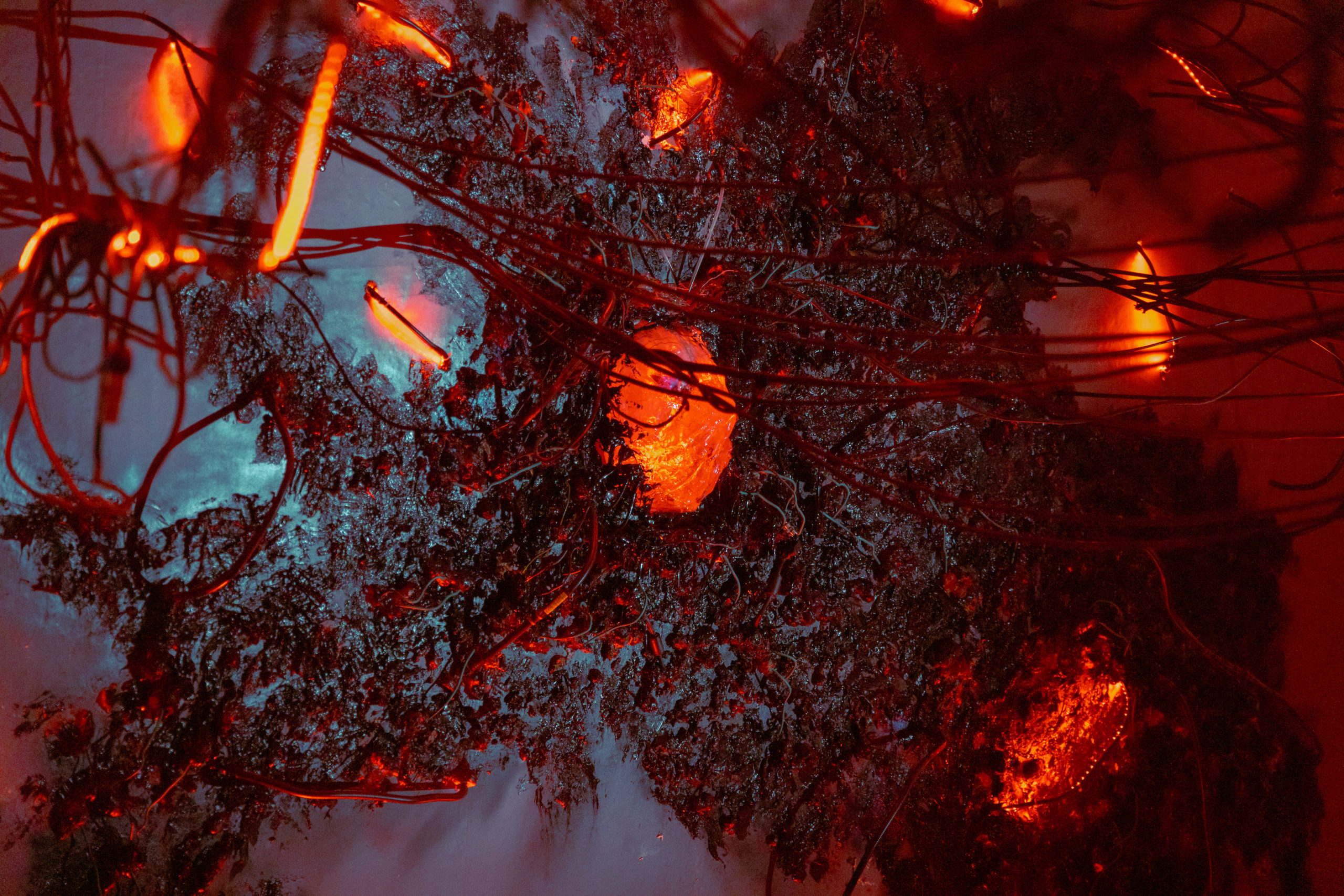
Rea-Matere is a staging of a body as the stage, in acts that are caught between the inescapable room inside and the inescapable one outside. A room that seems to precede and exceed the figure that speaks.
The walls begin to fall and the figure eats the mask off its face. And what is left of this stage: is it possible to speak from it, or even to act? This is the physical task that is offered and scorned. A bodily intensification just before words are formed; in a speech, in a circle, maybe the end of dialogue. A reminiscence of an inquisition cell, staging the ones who separated from speech to reveal a sound that no one wanted to begin with. It is a figure now within and now without walls. The defendant who laughs at her own trial. She who is in it is also the begetter of it, the room, the body: Rea-Matere.
Questions and terror, my beloved ones, and in between the laughter.
Rea-Matere continues Ala-Ruona’s study into how conceptions of the body, inside and out, become neutralised and subject to the violation of language and its unending mechanisms. At its centre is a performer practice that moves, voices, and undergoes metaphysical transformation, while desiring to empty itself.
The material is part of an ongoing development of body practice and stage work in dialogue with dancer Mina Tomic, culminating in a production called Damnat, premiering at Zodiak Center for New Dance, Helsinki, in May 2027. The working group of Rea-Matere also includes sound designer Tuukka Haapakorpi, stage and costume designer Teo Paaer and producer Sanna Ritvanen.
Press



Paul McCarthy and Mike Kelley, Sod & Sodie Sock Comp O.S.O, 1998 Performance, video, photographs, installation © Paul McCarthy and Mike Kelley Foundation for the Arts. Courtesy the artists and Hauser & Wirth. Photo: Angelika Hausenblas
Ausgang Studio, Age of Data, 2026
Installation

Benjamin Orlow, You knew I was a snake, 2025
Single channel video, 5min 49 seconds

Chino Moya, AutoXenoSim, 2026
Three channel 4k 5′ looped video 5min 38sec, 1 x 75″ screen 2 x 43″ screens, aluminium frames + 6 aluminium flat sculptural pieces
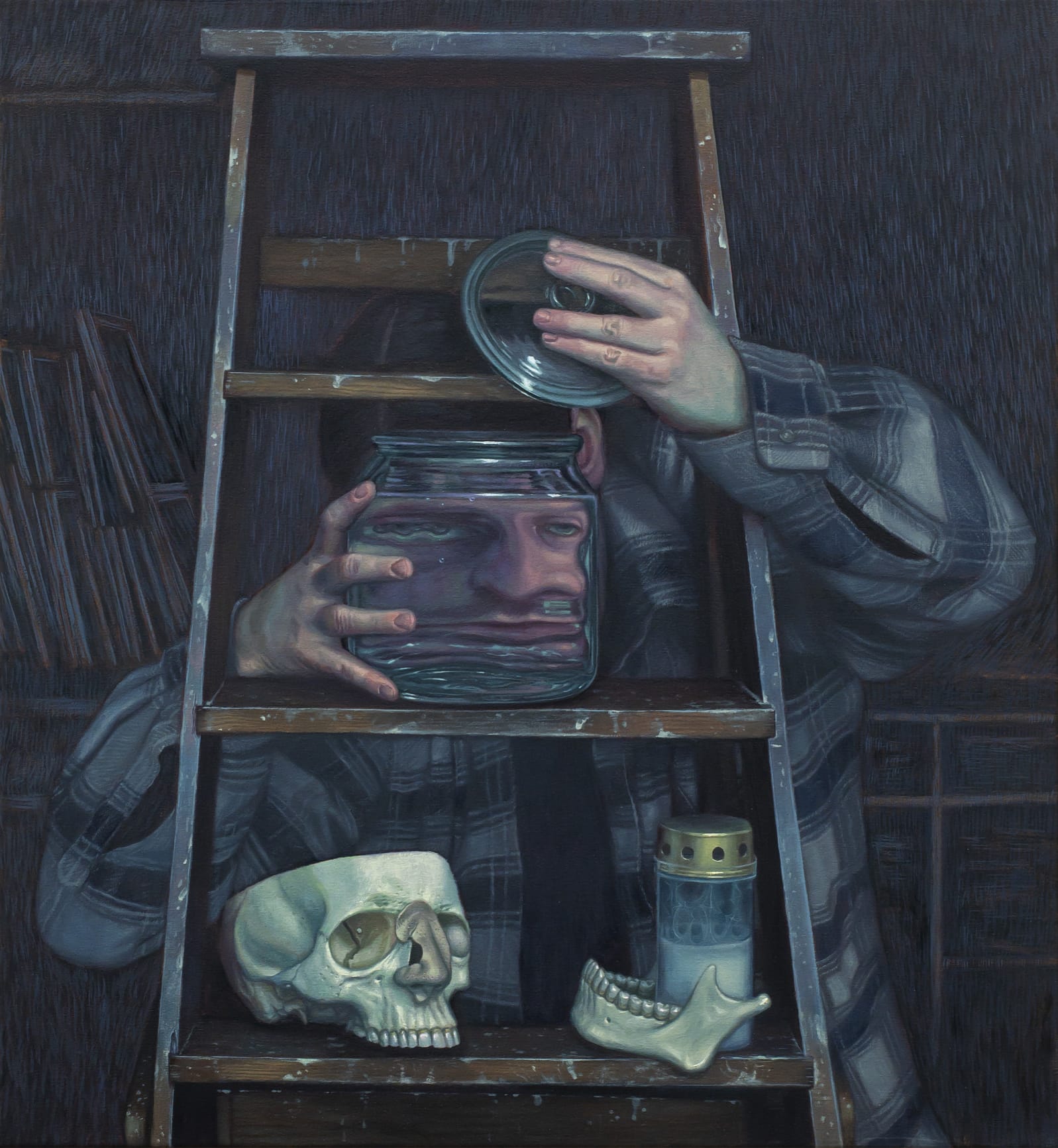
Joel Slotte, Still life painter putting together a vanitas motif, 2026
Oil on canvas
70 x 65 cm

Paul McCarthy and Mike Kelley, Sod & Sodie Sock Comp O.S.O, 1998
Performance, video, photographs, installation
© Paul McCarthy and Mike Kelley Foundation for the Arts. Courtesy the artists and Hauser & Wirth. Photo: Angelika Hausenblas
Philip Speakman
The Authentic Paranormal: Power and the Anomalous
Incident I
A young girl stares knowingly into the camera, her half smiling face slightly out of focus in the sepia browns and beiges. Behind her runs a small softly rendered waterfall, and in the foreground below her chin four tiny women with large butterfly wings on their backs dancing and playing instruments.
In 1917, two cousins from Bradford, Elsie Wright and Frances Griffiths, aged 16 and 9 respectively, took a series of photos which would later go viral and become known as the Cottingley Fairies photos. The photos would first gain attention in 1919 through interest from the local Theosophical Society, before later attracting Sherlock Holmes author Arthur Conan Doyle who helped publish the photos. Through the attention brought to them by Doyle’s celebrity, the images took on a form of pre-internet virality, animated by, as Wright and Griffiths would later protest, the desires of people like Doyle; “they wanted to be taken in”[1]. When they would come to admit to the hoax in the 1980’s however, their stories would diverge, with Elise claiming all the images were faked, and Frances claiming that the last photo, in which neither of the girls were present, captured a real fairy; “I saw these fairies building up in the grasses and just aimed the camera and took a photograph”[2]. In recent reanalysis of the history, researcher Christine Ferguson points out how, far from a deliberate hoax, the images began as a family in-joke. For Ferguson, it was power imbalance between the “plebeian producers and elite cosmopolitan popularisers” of Doyle and the Theosophists who pressured them to take more photos to advance their new religious beliefs which lead to the incident being historically viewed as a hoax. Ferguson contends that the images should really be viewed as expressions of “artistic aspirations” in line with the “social restrictions experienced by working-class girls in early twentieth-century Britain”. As such, the Cottingley incident dramatises a historical entanglement between technology and otherworldly encounters, as new imaging technologies, far from eradicating supernatural beliefs through the purging lens of Enlightenment rationalisation, only serves to reproduce older otherworldly superstitions, as existing power arrangements continue to act upon the reproduction of contemporary anomalous beliefs.
Incident II
A nighttime view from a family home’s window rendered ominous by the low-resolution video camera’s flattening of forms and its furtive glances out towards whatever might be hiding in the low bit-depth darkness. Glimpses of what could be a figure seem to cause glitched refractions as if in the presence of some disruptive entity haunting the bleakly beautiful under exposed suburban woodlands and domestic interiors. “A clip which doesn’t fit with the others” reads the text, producing the sensation of being witness to something genuinely strange in the lurking presence[3].
Uploaded to YouTube between 2009 and 2014, Marble Hornets was made by Troy Wager and friends as an ARG (Alternate Reality Game), a form of mystery puzzle narrative told through videos and posts to different YouTube and Twitter accounts. Marble Hornets is a key text in the development of internet born monster Slenderman, the poster ghoul for the online community known as creepypasta, centred on the creating and sharing of horror stories online. Having its heyday during Marble Hornets’ run, creepypasta has been described in terms of a new digital folklore constructed through highly collaborative open-source storytelling, and might be thought of as a contemporary analogue of the same type of low-means grass roots creativity aimed at paranormal intrigues which motivated Wright and Griffiths. In telling its story across different mainstream internet platforms, insinuating its narrative and characters into the fabric of everyday internet interactions, Marble Hornets (and creepypasta more broadly) utilises a mode Line Henriksen has dubbed the “authentic paranormal”[4], that of presenting the supernatural within the “aesthetics of the real”, a convention going back to Walpole’s Castle of Otranto and present within the Cottingley affair too. In the context of participatory web.2 media engagement, this toying with authenticity in its presentation isn’t a case of hoaxing or deception, but what Dr Vivian Asimos has described as an invitation for “playing with belief”[5]. Different to Coleridge’s suspension of disbelief, Asimos see “users engage with a playful performance of belief – ludically immersing themselves in ontological realities beyond their own”. Through creepypasta, the same artistic aspirations of the Cottingley girls and people’s desire to be “taken in” by otherworldly phenomena, produce a space from which new collective subjectivities, identity expressions and forms of creative agency might emerge. As such, playing with belief in paranormal phenomena becomes the basis for a “Shared Pretensive Reality”[6] outside of the culture industry and those that would seek to profit from or manipulate these desires, that is to say a playful and communally authored reality which weirds the bounds of everyday online interactions, revealing their contingency and the possibility for their unmaking.
Incident III
The camera peers in to examine the grizzled details as the surgeon pulls back the skin from around the bulbous cranium, the gore and viscera below obscured by its soft focus and dancing film grain. The camerawork, simultaneously obtrusive and cryptic, shows the grey cadaver’s pinched face staring upwards in an expression of absurd dead hostility, the stillness made more eerie by the static filled silence which scores the strange scene. As the brains are removed and its innards glisten in blown-out black and white, another man watches and takes notes from behind glass, presumably part of the team of government agents responsible for learning from this crashed anomaly[7].
First aired on Fox in the 1995 pseudo-documentary Alien Autopsy, Fact of Fiction?, but now available uncut on Reddit, the footage was presented as dating back to 1947 and the aftermath of the Rosewell UFO crash. Just ten years later however, its director, film producer Ray Santilli, owned up to the hoax, achieved with the help of model maker John Humphreys’ prosthetics work, but maintained, like Frances Griffiths, that the film was based on real footage he’d seen from a genuine alien autopsy. In 2022, the US Government officially shifted to using “Unidentified Anomalous Phenomena” (UAPs) when discussing Unidentified Flying Objects, a move concomitant with a wave of high profile UAP admissions and released by the Pentagon and a renewed interest in their study[8]. If the term anomalous usually conjures associations of statistic abnormalities which must be set aside lest they disrupt the expected model, what does it mean when anomalous incidents are now evidenced, released and endorsed by organisations like the US Department of War, when the anomaly isn’t thrown out but absorbed into the messaging of the state? In their discussion of the anomalous in A Thousand Plateaus, Deleuze and Guattari trace the term’s etymology to its ancient Greek origins, finding that, differentiated from the abnormal, the term pertained to “the unequal, the coarse, the rough”[9] which runs against the grain. As such, for them the anomalous is “the cutting edge of deterritorialization”, best understood not through its characteristics, but for its positionality and affects; it is a “phenomenon of bordering”, neither “an individual nor species, it has only affects”. Resultantly the anomalous phenomena should be understood as that encounter which does not fit and so changes the make up of the whole as it is absorbed through, as Deleuze and Guattari describe, contagion, pacts and “monstrous alliance[s]”. Placed against the backdrop of an ever-thickening epistemological fog descending over online and offline life, what new “monstrous alliances” does Trump form with the MAGA believer by bringing these encounters out into the open; what new protective pact is formed through the administration’s allusions to extra-terrestrial threats, and what does this more uncertain terrain of belief infect in the long run? Reversing for a moment, creepypasta’s declining popularity came in part due to the notoriety it garnered following the tragic attempted murder of a young girl by two other mentally unwell girls who believed they were serving Slenderman. What would get dubbed the ‘Slenderman stabbing’, commentators saw this as proof of the evil influence the made-up figure had on young minds they believed were unable to disentangle authentic paranormal fictions from reality. Tragic through the events were, the events around the stabbing acted as a sort of inverse cross-generational premonitions of the internet’s next act of collective mythmaking. In what has been described as “slenderman for boomers”[10], the QAnon conspiracy theory began as what’s known as a LARP on 4chan, posting fictional content as-if it were real to invite people to play along. After QAnon’s neo-fascist fiction of a cabal of Satanic child-sacrificing elites drinking the blood of children broke loose of its 4chan origins and began addling the minds of boomers on Facebook, the narrative would lead to a spree of real life violence and contributed in no small part to the January 6th capitol riots, as once again it was adults who were unable to unwilling to disentangle fiction from reality or understand the rules of the game being played by the community. In June 2026, with QAnon promoter Kash Patel in charge of the FBI and UAP reports now part of the messaging of the state, beliefs which might have looked like anomalous blips first time round have seemingly found their way into the core, as they spread outwards to infect and remake the whole of contemporary capitalist society. As Alberto Toscano has described following Gramsci’s observations on capitalist folklore, within the fascist elements arising from capitalism’s contradictions and inconsistencies “folklore is official”[11] as “the incoherence at the top [repeats] and [intensifies] the confusion at the bottom”.
This article borrows from and repurposes passages from “It May Start Out as a Game But It Ends up a Whole World”: Creepypasta, QAnon, and the Anomalous Tales of the Internet by Philip Speakman, published in Contemporary Legend Journal (2025).
[1]“Fairies, Phantoms, and Fantastic Photographs”, Arthur C. Clarke’s World of Strange Powers, ITV (22 May 1985. No. 6, season 1).[2]Christine Ferguson, ‘Power at Play in Paranormal History’, Science Museum Group Journal (Autumn 2024).
[3]Troy Wagner, et al. ‘Marble Hornets’ YouTube series, 2009–2014, https://www.youtube.com/@MarbleHornets.
[4]Line Henriksen, ‘A Short Bestiary of Creatures from the Web’, The Ashgate Research Companion to Paranormal Cultures (London: Routledge, 2013), 405-416.
[5]Vivian Asimos, ‘Everything is True Here, Even if it Isn’t: the performance of belief online’, Journal of the British Association of the Study of Religions (2020) 44-54.

Teo Ala-Ruona & collaborators: Rea-Matere, Hunajanjyvä 2026, photo by Rober Ra.